A very good typist types 80 to 120 words a minute, and champions rarely sustain more than 150. Yet in courtrooms, parliaments and live captioning, professionals transcribe speech at over 200 words a minute, for hours on end. They don't use an ordinary keyboard but a stenotype.
The principle: chords instead of letters
On a normal keyboard you type one letter at a time. In stenotype you press several keys at once, like a chord on the piano, and that chord produces a syllable or a whole word.
To write "cat", you don't type C, A, T one after another: you press the keys for the word's sounds in a single stroke. One movement, one word. That's what makes it possible to keep up with someone speaking, at around 150 words a minute in conversation and often faster.
The machine
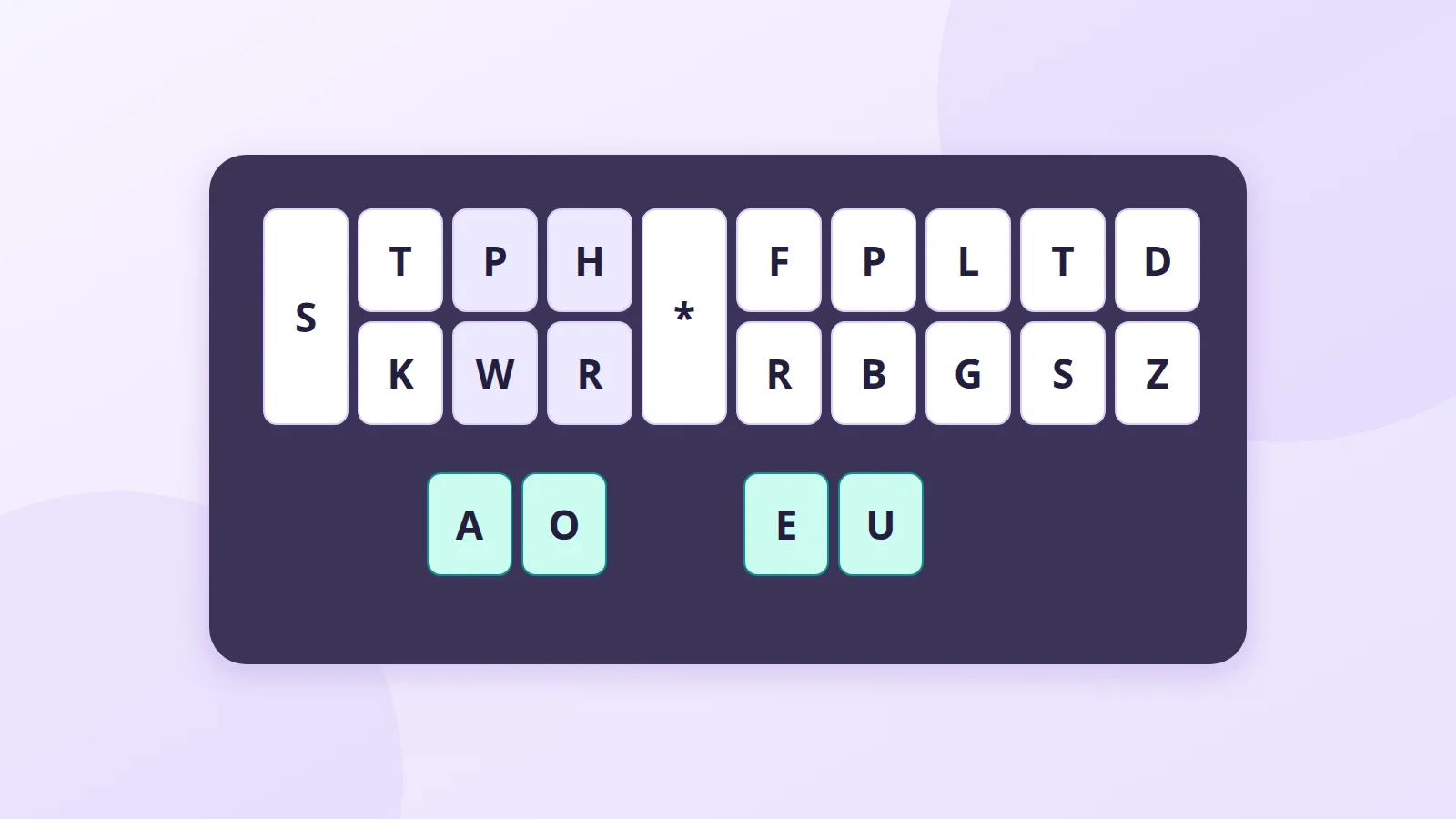
A stenotype looks like a small keyboard with no labels, often on a tripod. The English version, the most widespread, has just over twenty keys, laid out like this:
- on the left, the consonants at the start of a syllable;
- under the thumbs, the vowels;
- on the right, the consonants at the end.
Since there isn't one key per letter, missing sounds come from combinations. B, for example, is P and W pressed together, and M is P and H.
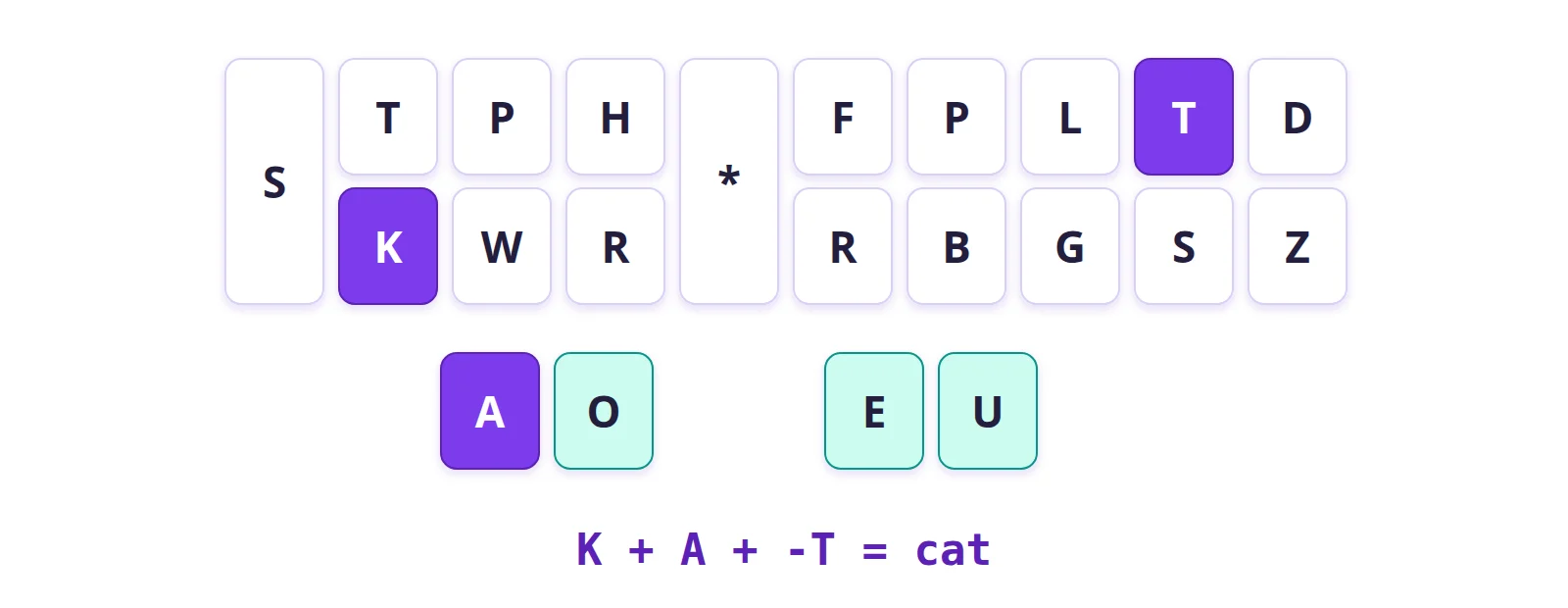
The machine sends this code to a computer, which turns it into text using a dictionary specific to each stenographer, with correct spelling and punctuation.
Plover: steno for everyone
For a long time stenotype was for professionals only: machines and software cost thousands of dollars, and training took years.
The open-source Plover project changed that. This free software turns an ordinary keyboard into a stenotype, provided the keyboard registers several keys pressed at once (many mechanical and gaming keyboards do). Dedicated hobbyist steno keyboards also exist for around $100.
How long does it take to learn?
It's a long process, comparable to learning an instrument:
- in the first months you learn the chords and type slowly, sometimes slower than on a normal keyboard;
- then you learn "briefs", shortcuts for common words, and your speed climbs gradually;
- professional speeds generally take one or two years of regular practice.
What it's used for today
Speech recognition has come a long way, but stenotype still has advantages:
- accuracy: a stenographer handles proper names and technical vocabulary and knows who's speaking, where software still makes mistakes;
- discretion: you can take notes silently in a meeting;
- comfort: your hands barely move, which appeals to people with wrist pain.
Further reading
- The history of the keyboard
- The future of text input
- Mechanical keyboards
- The Open Steno Project: Plover
- National Court Reporters Association