
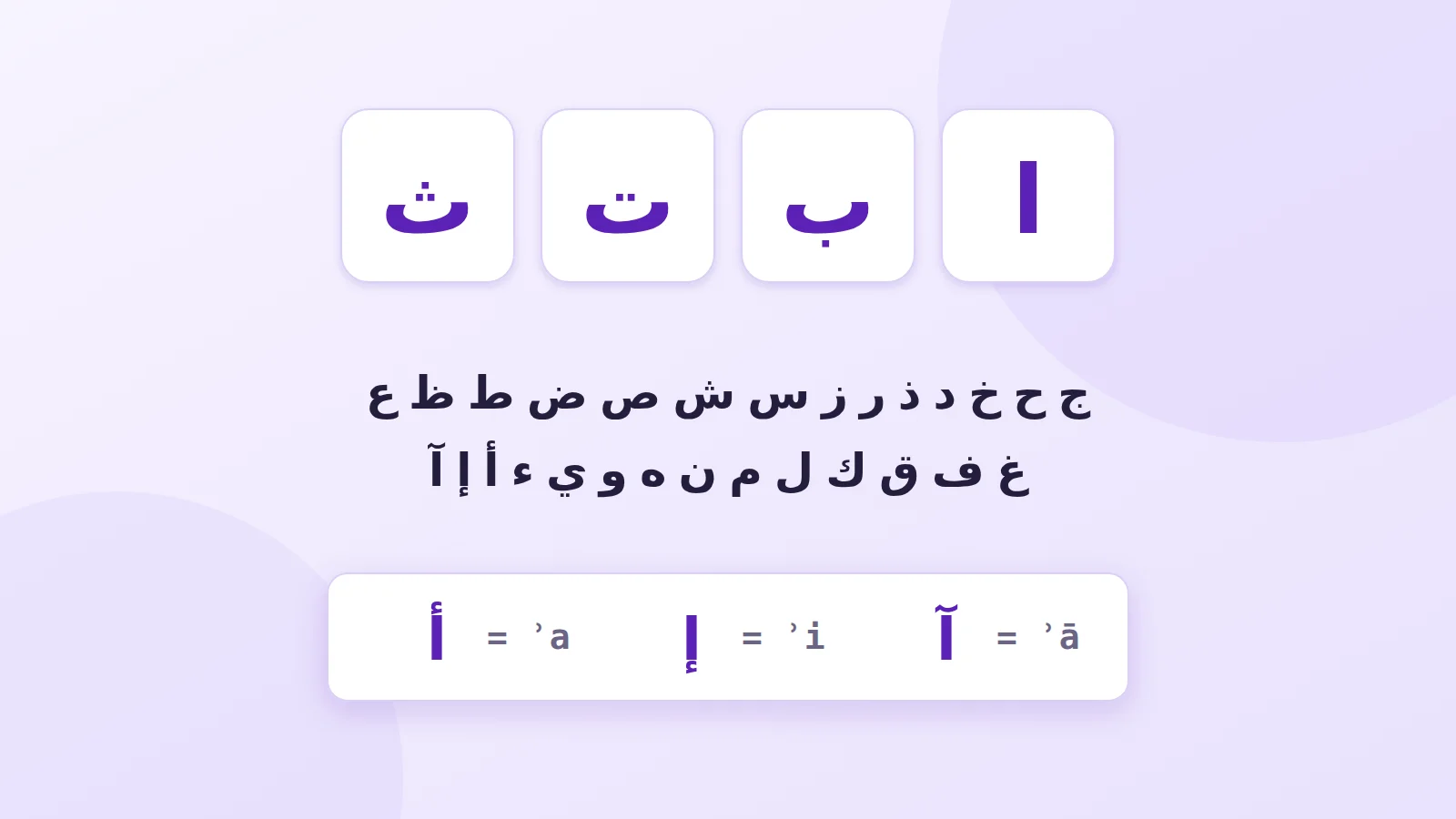
The Arabic alphabet has 28 letters, all consonants, written from right to left and joined together. The chart gives each letter's name, transliteration, pronunciation and four positional forms. Click a letter to copy it.

The 28 letters of the Arabic alphabet

LetterNameTransliterationPronunciation (IPA)IsolatedInitialMedialFinal
ألفalifā/aː/اـا
باءbāʾb/b/ببــبــب
تاءtāʾt/t/تتــتــت
ثاءṯāʾṯ/θ/ثثــثــث
جيمǧīmǧ/d͡ʒ/ججــجــج
حاءḥāʾḥ/ħ/ححــحــح
خاءḫāʾḫ/x/خخــخــخ
دالdāld/d/دـد
ذالḏālḏ/ð/ذـذ
راءrāʾr/r/رـر
زايzāyz/z/زـز
سينsīns/s/سســســس
شينšīnš/ʃ/ششــشــش
صادṣādṣ/sˤ/صصــصــص
ضادḍādḍ/dˤ/ضضــضــض
طاءṭāʾṭ/tˤ/ططــطــط
ظاءẓāʾẓ/ðˤ/ظظــظــظ
عينʿaynʿ/ʕ/ععــعــع
غينġaynġ/ɣ/غغــغــغ
فاءfāʾf/f/ففــفــف
قافqāfq/q/ققــقــق
كافkāfk/k/ككــكــك
لامlāml/l/للــلــل
ميمmīmm/m/ممــمــم
نونnūnn/n/ننــنــن
هاءhāʾh/h/ههــهــه
واوwāww / ū/w, uː/وـو
ياءyāʾy / ī/j, iː/ييــيــي

Hamza, tāʾ marbūṭa and other letter variants

LetterNameTransliterationPronunciation (IPA)IsolatedInitialMedialFinal
همزةhamzaʾ/ʔ/
همزة على الألفhamza ʿalā alifʾa / ʾu/ʔa, ʔu/أـأ
همزة تحت الألفhamza taḥta alifʾi/ʔi/إـإ
ألف مدّةalif maddaʾā/ʔaː/آـآ
همزة على الواوhamza ʿalā wāwʾ/ʔ/ؤـؤ
همزة على الياءhamza ʿalā yāʾʾ/ʔ/ئئــئــئ
تاء مربوطةtāʾ marbūṭaa / at/a, at/ةـة
ألف مقصورةalif maqṣūraā/aː/ىـى
لام ألفlām-aliflā/laː/لاـلا

Short vowels and diacritics (ḥarakāt)

LetterNameTransliterationPronunciation (IPA)
فتحةfatḥaba/ba/
كسرةkasrabi/bi/
ضمةḍammabu/bu/
سكونsukūnb/b/
شدّةšaddabb/bː/
تنوين الفتحtanwīn al-fatḥban/ban/
تنوين الكسرtanwīn al-kasrbin/bin/
تنوين الضمtanwīn aḍ-ḍammbun/bun/

To type whole words, use the Arabic Keyboard Online.

A cursive script read from right to left

Arabic is written from right to left, has no capital letters, and joins the letters of a word much like handwriting. Each letter therefore has up to four shapes: isolated, initial, medial and final. The letter ه, for example, becomes هـ at the start of a word, ـهـ in the middle and ـه at the end. This is not 112 separate symbols to memorize: the core shape stays recognizable, and the keyboard picks the right variant for you.

Six letters break the chain: ا د ذ ر ز و connect to the letter before them but never to the one after. They only have isolated and final forms, and the next letter starts again with an initial form. That is why a word like وزير (wazīr, minister) looks split into several pieces. Lām followed by alif always fuses into the ligature لا.

Letter families told apart by dots

Many letters share one skeleton and differ only in the number and position of their dots: ب ت ث (b, t, ṯ), ج ح خ (ǧ, ḥ, ḫ), د ذ (d, ḏ), ر ز (r, z), س ش (s, š), ص ض (ṣ, ḍ), ط ظ (ṭ, ẓ), ع غ (ʿ, ġ). The traditional order used in the chart keeps these families together. Learning the skeletons first and the dots second is the fastest route: in practice you need about fifteen basic shapes.

Sounds English does not have

A few consonants take practice for English speakers:

  • ح (ḥ): a strong breathy h made by tightening the throat, with no scraping.
  • ع (ʿ): a voiced squeeze deep in the throat, the most distinctive Arabic sound.
  • خ (ḫ): like the ch in Scottish loch or German Bach.
  • غ (ġ): a gargled sound close to the French r.
  • ق (q): a k pronounced much further back, at the uvula.
  • The emphatics ص ض ط ظ: s, d, t and ḏ said with the back of the tongue raised, which darkens the neighbouring vowel.

ث and ذ are the th of think and of this. Pronunciation varies across dialects: ج is often j as in French jour in North Africa and g in Egypt, and ق can become g or a glottal stop.

Missing vowels and Arabizi

The script records consonants and long vowels (ا ā, و ū, ي ī) but almost never short vowels. كتب can be read kataba (he wrote) or kutub (books), and context decides. The marks in the third chart (fatḥa, kasra, ḍamma, sukūn, šadda, tanwīn) are only used in the Quran, learning materials and children's books, or to remove an ambiguity.

To write Arabic on a Latin keyboard, many people use Arabizi, in which digits stand for sounds the Latin alphabet lacks: 3 for ع, 7 for ح, 5 for خ, 2 for ء, and in the Maghreb 9 for ق (in the Levant and the Gulf, 9 usually stands for ص). The phonetic mode of the Arabic virtual keyboard follows these conventions, so you can type whole words in Arabic from a standard keyboard.

Frequently Asked Questions

How many letters are in the Arabic alphabet?

28. Hamza (ء) is usually not counted as a separate letter, although some textbooks include it and speak of 29. Tāʾ marbūṭa (ة) and alif maqṣūra (ى) are variants of ت and ي, not extra letters.

Is Arabic written from right to left?

Yes. Letters and words run from right to left. Numbers are the exception: multi-digit numbers are written with the highest digit on the left, as in English.

Why do Arabic letters change shape?

Arabic script is cursive, so most letters have a different shape at the start, middle or end of a word, or when standing alone. The core shape stays the same; only the connecting strokes change. On a computer this happens automatically: you always press the same key.

Which Arabic letters do not connect?

Six letters, ا د ذ ر ز و, join to the letter before them but never to the letter after. That is why a word such as دار (dār, house) is broken into separate pieces.

Does Arabic have vowels?

Long vowels ā, ī and ū are written with ا, ي and و. Short vowels a, i and u are small marks above or below a consonant (fatḥa, kasra, ḍamma) and are left out in most everyday text; they appear in the Quran, textbooks and children's books.

What do 3, 7 and 9 mean in Arabic chat?

This is Arabizi, Arabic typed with Latin letters and digits: 3 = ع, 7 = ح, 5 = خ, 2 = ء, and in North Africa 9 = ق. The digits were chosen because they look like the Arabic letters. The phonetic mode of the Arabic keyboard understands them.

What is the best way to learn the Arabic alphabet?

Learn the letters in families that share a shape (ب ت ث, ج ح خ, س ش…), so you only memorize about fifteen skeletons plus their dots. Then read short vowelled words and practise typing them to fix the joined forms in memory.

How can I type Arabic without an Arabic keyboard?

Click a letter in the chart to copy it, or open the Arabic virtual keyboard to type whole words: its phonetic mode turns Latin input into Arabic script (b → ب, 3 → ع, 7 → ح).

Other alphabets

Abdelmounaim Akadid

Abdelmounaim Akadid

Passionate about technology, web development and languages. Creator of ClavierVirtuel.com, a tool built to make multilingual typing easy for everyone.

LinkedIn