

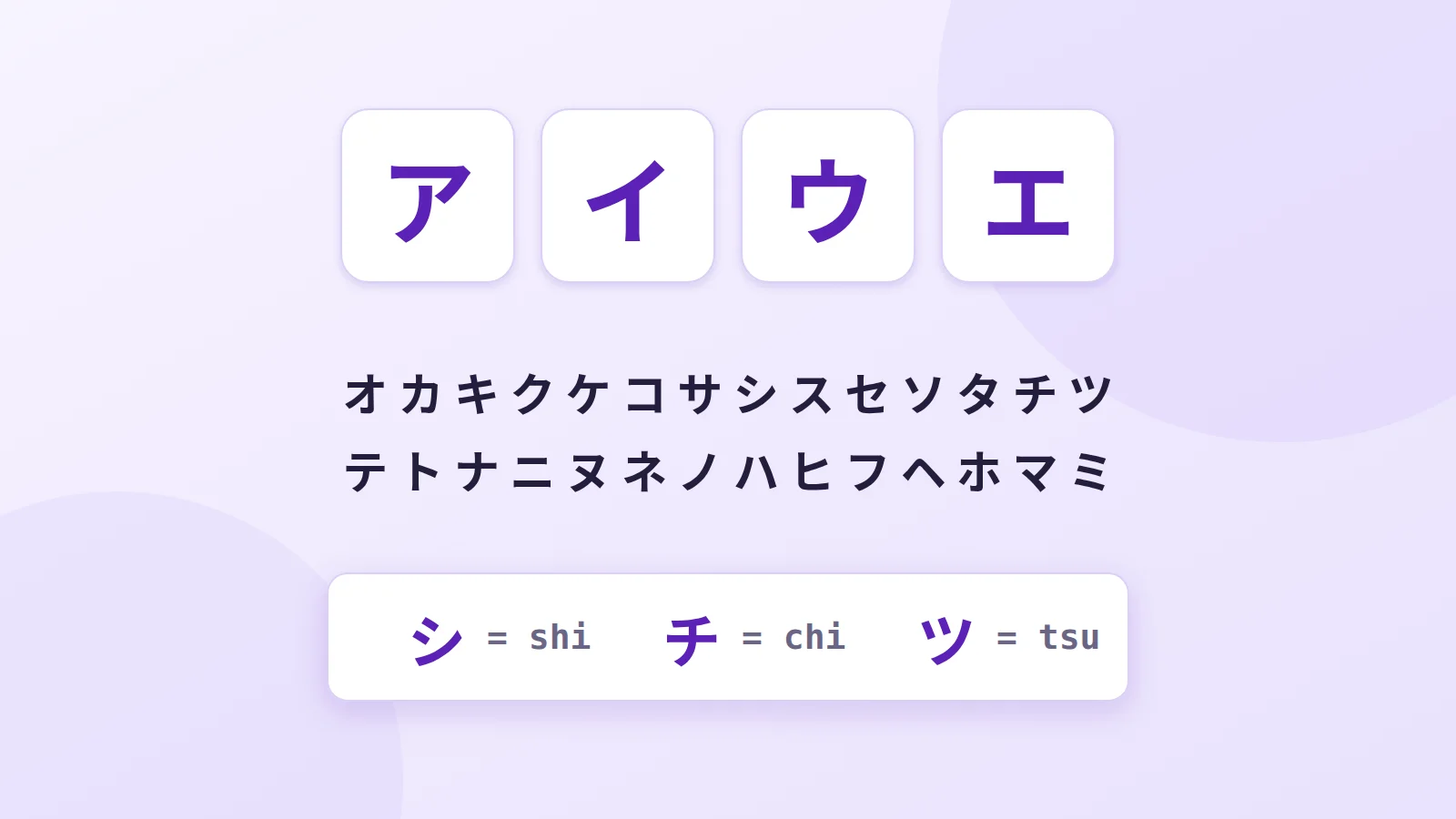
What katakana is used for
Katakana is one of the two Japanese syllabaries. Each character stands for a syllable, not a single letter, and every katakana has a hiragana twin with the same sound: カ and か are both ka. The script was created around the 9th century by Buddhist monks who annotated Chinese texts with simplified fragments of kanji; カ, for example, comes from the left part of 加, and イ from the left part of 伊.
Today katakana mainly writes loanwords (gairaigo) and foreign names: コンピューター (konpyūtā, computer), テレビ (terebi, television), アメリカ (Amerika). It is also used for onomatopoeia (ドキドキ, a pounding heart), for animal and plant names in scientific writing (ネコ, cat), for brand names and to make a word stand out, a little like italics in English.
Foreign names are adapted to Japanese phonology, where almost every syllable ends in a vowel. John becomes ジョン (Jon), Michael マイケル (Maikeru), Mark マーク (Māku), and London ロンドン (Rondon). Because Japanese has no separate l and r, both become the r row: ラ リ ル レ ロ.
Long vowels, small ッ and voicing marks
Three signs change how a katakana is read:
- The long vowel mark ー lengthens the previous vowel: コーヒー (kōhī, coffee), ビール (bīru, beer). In romaji it is shown with a macron (ō) or a doubled vowel.
- The small ッ doubles the next consonant, with a short pause before it: ベッド (beddo, bed), カップ (kappu, cup). Compare the full-size ツ (tsu).
- Dakuten ゛ and handakuten ゜ voice a consonant: カ (ka) becomes ガ (ga), ハ (ha) becomes バ (ba) or パ (pa).
The small ャ ュ ョ combine with an i-column character to form one syllable: キャ (kya), シュ (shu), チョ (cho). Written full size, キヤ would be read as two syllables, ki-ya.
Extended katakana and look-alike characters
To approximate sounds missing from Japanese, katakana uses combinations with small vowels: ファ (fa), ティ (ti), ディ (di), ウィ (wi), シェ (she), ジェ (je), チェ (che) and ツァ (tsa). パーティー (pātī, party) and ディズニー (Dizunī, Disney) are typical. The letter v can be written with ヴ (ヴァ, ヴィ, ヴェ…), but many common words still use the b row: ビデオ (bideo, video).
Several katakana look alike, and these pairs cause most reading errors:
- シ (shi) and ツ (tsu), ン (n) and ソ (so): in シ and ン the long stroke rises from the bottom left; in ツ and ソ it falls from the top right.
- ク (ku), ケ (ke) and タ (ta): タ is ク with an extra stroke inside, and ケ has a horizontal bar and a long tail.
- ワ (wa), ウ (u) and フ (fu), as well as チ (chi) and テ (te).
How to type katakana
On a computer with a Japanese input method, you type the romaji and convert: ko-hi- followed by F7 on Windows (Control-K on macOS) gives コーヒー. The hyphen key produces the long vowel mark ー, xtu or ltu gives a small ッ, and vu gives ヴ.
Our Japanese keyboard converts romaji to kana as you type: turn on transliteration mode, then press the あ/ア button to switch from hiragana to katakana. Typing ko-hi- gives コーヒー (the hyphen types the long vowel mark ー). On this page you can also click any character in the chart to copy it.